BARTCO

7 Key Benefits of Bartco’s Directional Arrow Board
 

Effective traffic management is crucial in Australia’s busy work zones and road projects. Bartco’s Directional Arrow Board stands out as a smart, reliable asset – combining visibility, efficiency, and rugged design to help keep motorists and workers safe.


1. High Visibility & Intelligent Design

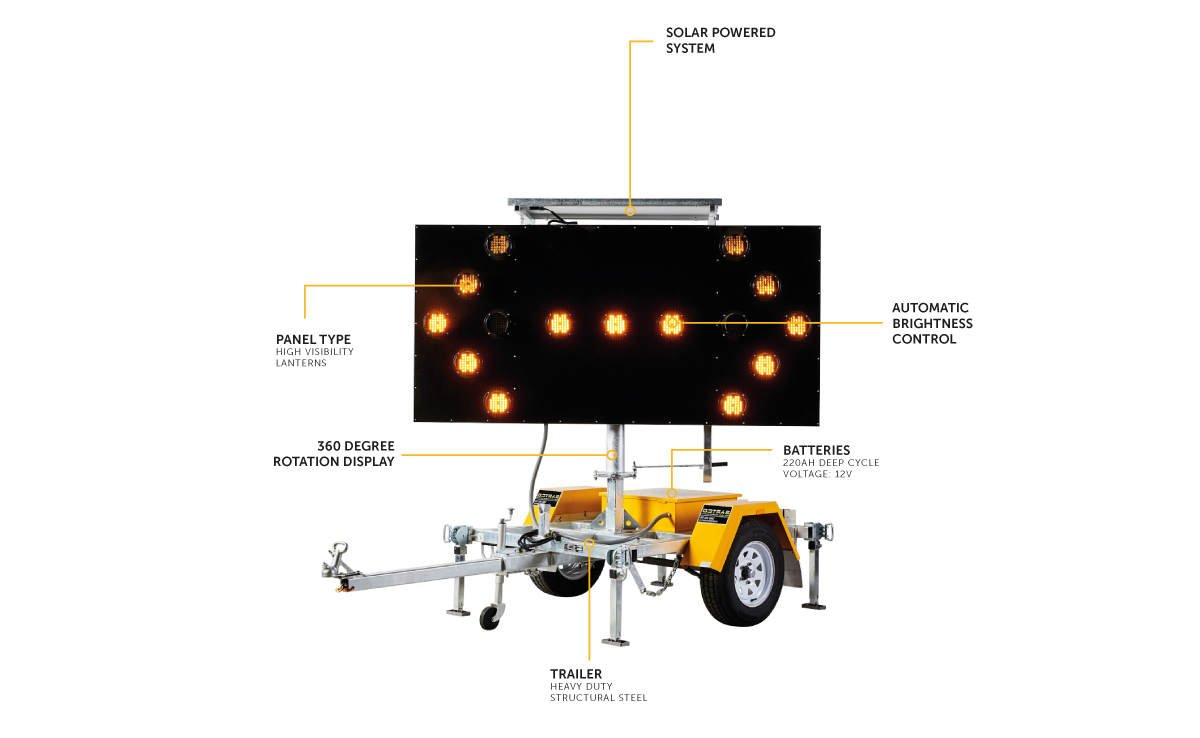
Ultra-bright LED lanterns arranged in clear arrow patterns ensure optimal driver guidance, even from long distances or during adverse weather.
Automatic dimming adapts brightness to environmental light, reducing glare and meeting regulatory best practices.

2. Solar-Powered & Energy-Efficient

Solar panels and deep-cycle batteries minimise reliance on generators or mains power – ideal for busy highways, remote mines, or multi-day setups.
LEDs consume very little power, delivering long operation times and lowering maintenance needs.

3. Robust Build for Harsh Australian Conditions

Lightweight yet tough, the aluminium-panelled board and sturdy steel trailer resist dust, vibration, and UV exposure.
Designed to last with minimal care, featuring corrosion-resistant finishes and sealed components.

4. Quick Deployment & User-Friendly Controls

Intuitive touchpad interface lets crews select arrow patterns (left, right, double, bar) easily, with clear console feedback.
Hydraulic mast and 360° rotation streamline setup, and trailer jack stands ensure fast stabilization on any surface.

5. Versatile Application Scenarios

Bartco’s Arrow Board suits diverse Australian environments:

Long-term lane closures on highways.
Dynamic traffic control in construction zones, mining sites.
Event traffic management, school zone arches & utility works.

6. Enhanced Safety & Traffic Efficiency

Promotes early warning, reducing fast lane changes and accident risk.
Improves traffic flow by clearly directing drivers, avoiding bottlenecks in busy or variable-speed areas.
Protects crews — clear visual guidance alerts motorists to slow down or shift lanes sooner.

7. Cost-Effective & Environmentally Friendly

Autonomous solar power allows deployment in remote areas without fuel costs or electricity hook-ups.
Minimal maintenance is required — clean LED panels and battery checks are all that’s needed.


Final Take

Bartco’s Directional Arrow Board is a top-tier solution for Australian traffic management:

  • Bright and dynamic visuals enhance early driver response.

  • Solar operation ensures off-grid reliability.

  • Durable build withstands harsh conditions.

  • Fast setup and easy control increase crew efficiency.

  • Flexibility for jobs from highway upgrades to event traffic.

For councils, contractors, and infrastructure teams aiming to meet Australian road safety standards and achieve seamless traffic control, this arrow board is an essential tool.



Instaboom Go: A Smarter, Safer Solution for Australia’s Evolving Traffic Management Needs

As Australia’s road networks continue to grow — and the pressure on traffic management teams increases — safety, speed, and efficiency have never been more important. With infrastructure projects ramping up nationwide and a renewed focus on worksite safety, innovative technologies like the Instaboom Go are redefining how we manage and protect road users and workers alike.


What is the Instaboom Go?

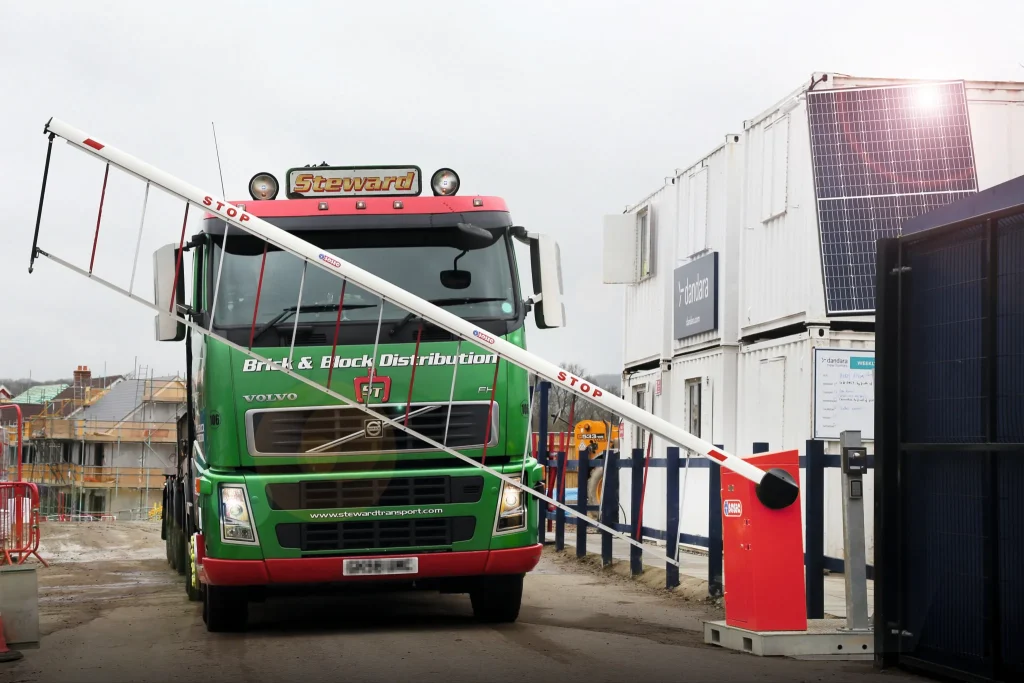
The Instaboom Go is a rapid-deploy, solar-powered, remote-oparated stop/slow barrier system designed for traffic control and site access management. Lightweight and compact, it can be transported in a van and set up by a single operator — making it ideal for dynamic environments and urban worksites where space, speed, and safety are critical.

Why It’s Perfect for the Australian Market

Instant Deployment – No Setup Delays

In the fast-paced environment of Australian roadworks and utility installations, every minute counts. The Instaboom Go can be deployed in under 5 minutes, drastically cutting down traffic management setup time and reducing exposure for site crews.

Ideal for urban night works, emergency call-outs, and short-duration lane closures.

Solar Powered for Off-Grid Efficiency

Australia’s sun-drenched climate is perfectly suited to solar-powered infrastructure. The Instaboom Go’s integrated solar panels allow for completely autonomous operation, removing the need for generators, external power sources or fuel logistics — reducing both costs and emissions.

Up to 1 week of battery life even in cloudy conditions. Zero carbon, zero noise.

Remote Operation = Safer Working Conditions

Unlike traditional manual barriers or cones, the Instaboom Go can be operated remotely from a safe distance. This means traffic controllers don’t need to stand in harm’s way to open or close access routes — drastically reducing risk in high-speed or low-visibility zones.

Enhance safety on high-speed rural roads, major highways and multi-lane closures.

Single Operator Setup – Reduce Labour Costs

Designed for one-person setup, the Instaboom Go simplifies logistics and enables smaller teams to manage access control more effectively. For contractors working to tight budgets — especially in regional areas — this reduces the need for additional personnel on site.

Fewer boots on the ground, with no compromise on safety or compliance.

Fully Compliant with Australian TM Standards

The Instaboom Go aligns with key principles of Austroads and state-specific traffic management codes. With its visibility, signage compatibility, and remote safety features, it ticks the boxes for temporary traffic management (TTM) compliance across all jurisdictions.

Easily integrated into existing TMPs and adaptable for both day and night operations.

 Versatile for a Range of Applications

From utility and telecoms installs to civil construction, rail access control, and local council works, the Instaboom Go is a plug-and-play solution. Whether you’re managing vehicle access at a temporary worksite or controlling traffic in real-time, it’s a robust, flexible tool.


Real-World Benefits at a Glance

Feature Benefit
Solar Powered Eco-friendly & silent operation
Remote Operation Keeps traffic controllers out of harm’s way
5-Minute Setup Maximise uptime, minimise exposure
Compact & Portable Easy to move between sites
Single Operator Use Lower cost, faster response

Australia’s infrastructure sector is moving toward more sustainable, tech-enabled traffic management. The Instaboom Go helps organisations stay ahead — not just by making sites safer, but also by improving operational efficiency and meeting carbon reduction targets.

If you’re looking to enhance your traffic management toolkit with mobile, intelligent access control, the Instaboom Go is ready to deploy — wherever the road takes you.


Bartco | Solar Gates: One supplier. Endless innovation. 100% Solar-Powered.

In the world of smart, sustainable access control and traffic management, few partnerships are as forward-thinking as the one between Bartco and Solar Gates. This collaboration brings together two leaders in their fields with a shared aim: to provide safe, efficient, and environmentally-friendly solutions for vehicle access and traffic control.

Solar Gates are a multi-award-winning manufacturer of solar-powered gate and barrier systems. Their solutions are designed for temporary and permanent site security, traffic control, and safe access to restricted areas—without the need for costly trenching or external power sources.

Their product range includes:

  • INSTABOOM®: a solar-powered, rapid-deploy traffic barrier ideal for lane closures, roadworks, and temporary site access.
  • SOSEC®: portable solar-powered security gates and barriers designed to protect sites and manage access 24/7.
  • INSTABOOM GO: an entirely portable, remote controlled, solar powered automatic Stop/Go board that allows traffic to be controlled efficiently in an instant.

Sustainable Site Access Management

With an increasing focus on sustainability, the ability to deploy access control solutions without fossil fuels or grid connections is a game changer. Bartco can offer Solar Gates’ SOSEC and INSTABOOM systems to organisations looking to meet environmental targets while improving site safety.

Rapid Deployment for Temporary Works

For traffic management companies and civil contractors, speed matters. INSTABOOM’s rapid deployment time and minimal setup make it ideal for temporary works and emergency traffic control. Bartco can provide these units for short-term hire or sale.

Security for Remote and Regional Projects

Remote mining and construction sites need robust, reliable access control without infrastructure. Bartco can supply SOSEC solar security gates as a turnkey solution that includes CCTV integration, remote monitoring, and zero-maintenance solar power.

Integration with Bartco’s Existing Tech

By combining Bartco’s intelligent transport systems (like VMS, radar speed signs, and CCTV trailers) with Solar Gates’ physical access barriers, clients get a comprehensive, fully integrated solution—from warning drivers, controlling speed, to managing access—all in one system.


Fire Danger Rating Sign Hits the UK.

BARTCO are proud to be the innovators of the Award-Winning  Electronic Fire Danger Rating Sign.

This clever innovation provides the public and motorists with fast, reliable and accurate information regarding fire ratings…that can save lives across Australia.

Working closely with the Australian Fire Danger Rating System (AFDRS), BARTCO have created a nationally recognised solution that displays a simplified, action-oriented fire danger rating system.

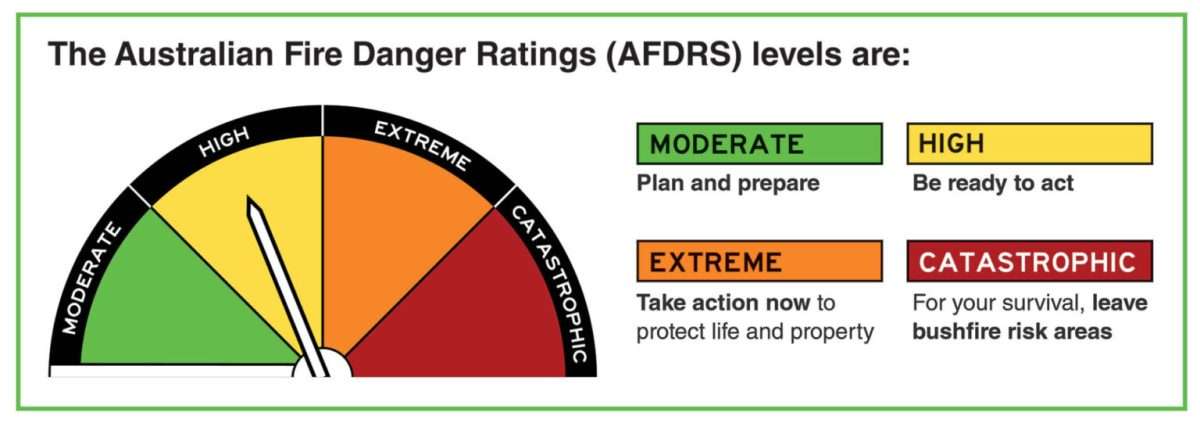
The Australian Fire Danger Rating System uses four easy to recognise rating levels, each with a message to encourage you to take action to protect the public in the face of bushfire risk.

The Fire Danger Rating Levels are:

  • Moderate: Plan and prepare
  • High: Prepare to act
  • Extreme: Take action now to protect your life and property.
  • Catastrophic: For your survival, leave bush fire risk areas.

The white bar under Moderate indicates No Rating for days where no proactive action is required by a community. This does not mean that fires cannot happen, but that any fires that start are not likely to move or act in a way that threatens the safety of the community.


And now, our award winner is making waves across the pond with the technology being utilised to minimise the risk of wildfires across the Peak District National Park. Find Out More

The Peak District National Park, located in central England, spans over 500 square miles, offering a diverse range of terrain—from rolling hills and rugged moorlands to lush valleys and charming villages.

There has been more than 30 moorland fires in the Peak District so far this year, including one in Goyt Valley that destroyed trees and grassland in an area bigger than more than 300 football pitches.

The Electronic Fire Danger Rating Signs (EFDRS) is made in Melbourne VIC and uses LED indicators, an LED message sign for notifications, combined with GPRS communication and a web-based interface to remotely send information, virtually instantly to a sign or network of signs.

Emma Shaw from the Moors for Future Partnership (MFP) said:

“The smallest spark from a campfire, barbecue or even a piece of litter could start a fire, so we are just looking at ways to help people adjust their own behaviours whilst visiting the Peak District. Depending on how many people see the sign could help us decide whether to put these signs all across the Peak District,”


Find out more about our Electronic Fire Danger Rating Sign  here


National Coverage: Delivering a Great Service

When it comes to portable traffic management solutions, BARTCO are a name trusted across the nation. Whether you’re a contractor in a remote Western Australian mining town or a city council in bustling Sydney, BARTCO ensures that innovative traffic solutions are delivered quickly and reliably—wherever you are in Australia.

National Reach, Local Reliability.

BARTCO logistics network is built for a country as vast and diverse as ours. With strategic distribution hubs and freight partnerships, BARTCO can supply products like portable traffic signals, VMS, CCTV systems, and pedestrian crossings to:

  • Urban city centres
  • Remote rural highways
  • Coastal communities
  • Major infrastructure projects across every state and territory

From Factory to Field: A Seamless Process.

Each BARTCO product is engineered and assembled in-house, giving the team full control over quality assurance and dispatch timelines. Once your order is confirmed, a streamlined logistics process kicks in:

  1. Order Processing & QA: Every unit is tested and inspected before dispatch.
  2. Tailored Packaging: Secure crating and weather-proofing for long-haul freight.
  3. Fast Courier or Freight Delivery: Partnering with leading transport carriers to reach all postcodes, including regional and remote areas.
  4. Tracking & Support: Real-time delivery updates and responsive customer support.

Speed Without Compromise.

Need equipment urgently due to a last-minute road project or emergency works? BARTCO offers priority dispatch options for time-critical deliveries. Many customers receive their orders within 2-5 business days, depending on location and equipment type.

Local Knowledge, National Coverage

BARTCO’s national coverage doesn’t stop at just delivery. Our team understands local council regulations, state-specific road rules, and conditions unique to each region. This knowledge ensures that products aren’t just delivered—they’re delivered ready to perform in your environment.


Post-Delivery Support.

Every delivery is backed by BARTCO’s technical support team, available to assist with setup, calibration, and troubleshooting. Onsite training and virtual guidance are also available—ensuring smooth rollout wherever you are.

Why Choose BARTCO for Nationwide Delivery?

  • Fast and flexible shipping Australia-wide
  • Post-delivery technical support
  • Local expertise with national scale
  • Durable equipment for all climates
  • Pre-configured, plug-and-play delivery

From the CBD to the red dirt roads, BARTCO delivers innovation with precision and reliability. When you need traffic control solutions that arrive on time and perform on-site—you can trust BARTCO to lead the way.

Contact us today to book a delivery or request a quote: service@bartco.com.au / Phone (in Australia) : 1300 306 106 / International : +61 3 9646 8580


Bartco | Mooven: A Partnership for the Future of Traffic Management

Australia’s roads are changing—and not just through new asphalt and upgrades. Behind the scenes, intelligent traffic technology is reshaping how roadworks, events, and infrastructure projects are managed. At the forefront of this evolution are Mooven. A traffic analytics platform that’s transforming how data is used in traffic control. And now, thanks to a powerful collaboration with BARTCO, that smart data is being put directly into action on the streets.

Who are Mooven?

Mooven are a cloud-based traffic intelligence platform that helps governments, contractors, and traffic engineers monitor road conditions in real time, using a combination of data sources such as:

  • Mobile GPS and Bluetooth data
  • Traffic flow analysis
  • Congestion detection
  • Journey time monitoring
  • Event impact assessments

By providing live insights, Mooven empowers teams to plan, manage, and adapt roadwork or traffic events with minimal disruption to road users.


So…Where Do BARTCO Come In?

While Mooven provide the data and intelligence, BARTCO delivers the tools that act on it.

As a leading manufacturer of portable traffic lights, variable message signs (VMS), CCTV solutions, and smart pedestrian crossings, BARTCO offers physical infrastructure that pairs seamlessly with Mooven’s smart analytics.

Together, they create a closed-loop system:

  1. Mooven detects traffic patterns and changes in flow.
  2. BARTCO’s connected signage and signals adjust accordingly or display real-time updates to road users.
  3. The system learns and optimises, reducing congestion and improving safety during works.

Practical Benefits of the Mooven | Bartco Integration

  • Dynamic Traffic Management
    Contractors can respond instantly to congestion or detours by updating BARTCO VMS based on Mooven’s alerts.
  • Improved Public Communication
    Clear, real-time messages help drivers make informed decisions, thanks to data-driven updates.
  • Faster Project Completion
    With better planning and real-time insights, projects can be executed more efficiently—often in less time and with fewer complaints.
  • Minimised Disruption
    Smart scheduling from Mooven, combined with BARTCO’s responsive equipment, reduces frustration for commuters.

Real-World Example:

A night-time resurfacing project on a major arterial road:

  • Mooven identifies that traffic will drop significantly between 10:30 PM and 4:00 AM.
  • BARTCO’s VMS are automatically scheduled to update messages to notify drivers of temporary closures or alternate routes.
  • If congestion builds unexpectedly due to an incident, alerts are sent, and signage is dynamically updated.

The result? Safer, faster, and less disruptive roadwork.


A Partnership for the Future of Traffic Management

The Mooven | BARTCO collaboration is part of a growing trend in Australia toward smarter infrastructure. With governments and contractors under pressure to deliver faster projects with minimal disruption, this data + deployment model is proving essential.

Ready for Intelligent Roadworks?

If you’re managing traffic projects, events, or infrastructure upgrades, the integration of Mooven analytics with BARTCO’s equipment offers a smarter, more responsive way to work.

Contact us today to learn how smart traffic solutions can support your next project.


A,B or C / 3 Sizes / 5 Colour

As a leader in intelligent transport systems, BARTCO offer a range of Variable Message Signs (VMS) designed to cater to diverse traffic management needs. Our VMS A, B, and C models are tailored for specific applications, ensuring optimal visibility and compliance with Australian standards.

VMS-A – Compact and Versatile

Specifications:

  • Display Size: 1610mm x 1040mm
  • Trailer Size: 2450mm (L), 1640mm (W), 2260mm (H)  / Weight: 600kg
  • Recommended Speed Zone: Up to 60 km/h

The VMS-A is ideal for urban environments and areas with lower speed limits. Its compact design allows for easy deployment in constrained spaces, making it suitable for city streets, school zones, and temporary roadworks.


VMS-B: Mid-Range Visibility

Specifications:

  • Display Size: 2360mm x 1440mm
  • Trailer Size: 3740mm (L), 1950mm (W), 2700mm (H)  / Weight:1200kg
  • Recommended Speed Zone: 60–90 km/h

Positioned as a mid-range solution, the VMS-B offers enhanced visibility for higher speed zones. It’s well-suited for suburban roads and arterial routes, providing clear messaging to drivers traveling at moderate speeds.


VMS-C: High-Speed Applications

Specifications:

  • Display Size: 2730mm x 1850mm
  • Trailer Size: Trailer Dimensions: 3740mm (L), 1950mm (W), 2700m (H) / Weight:1200kg
  • Recommended Speed Zone: Over 90 km/h

Designed for high-speed roadways, the VMS-C ensures maximum visibility for fast-moving traffic. Its large display and character size make it suitable for highways and major thoroughfares, where early message recognition is critical.

Shared Features Across All Models

  • Compliance: All models are 100% compliant with Australian standards and NATA approved.
  • Display Options: Available in both original 5 Colour & Amber displays.
  • Control Systems: Operable via WebStudio allowing for on-the-fly message creation and customisation.
  • Software: Includes all Australian standard road signs, facilitating quick message deployment.
  • Customisation: Users can design individual sequences and displays tailored to specific needs.

Choosing the Right VMS for Your Needs

  • VMS-A: Best for low-speed urban areas, school zones, and tight spaces.
  • VMS- B: Ideal for medium-speed roads, offering a balance between size and visibility.
  • VMS-C: Suited for high-speed highways, ensuring messages are seen and understood promptly.

Selecting the appropriate VMS model depends on the specific requirements of the deployment area, including speed limits, space constraints, and visibility needs.


London 2012 – Powering Smart Transport Solutions for Global-Scale Events.


BARTCO’s involvement at London 2012 showcased the scalability, reliability, and innovation behind our ITS solutions—paving the way for international expansion and reinforcing our commitment to supporting complex, high-stakes operations around the world.

Challenge: Delivering Seamless Transport Management for a Global Event

The London 2012 Olympic and Paralympic Games presented one of the most complex logistical and traffic management challenges in modern UK history. With millions of visitors, thousands of athletes, and extensive security protocols, ensuring the safe and efficient movement of people and vehicles was paramount. The organisers required a reliable, flexible, and intelligent transport solution capable of real-time communication and rapid deployment.

Solution: BARTCO’s Intelligent Transport Systems in Action

BARTCO, along with sister company MVIS were entrusted with delivering critical ITS infrastructure to support the Games. Our team supplied and managed a comprehensive network of Portable Variable Message Signs (VMS) across key Olympic venues and transport corridors.

  • Real-Time Traffic Communication: BARTCO’s VMS units provided live updates on road conditions, closures, diversions, and public transport information.
  • Smart, Sustainable Technology: Solar-powered and trailer-mounted, the signs were designed for rapid relocation and minimal environmental impact—aligning perfectly with the sustainability goals of London 2012.
  • Seamless Integration: Our systems were integrated with Transport for London (TfL) and LOCOG operations, enabling instant updates and centralised control.
  • Reliable Performance: Throughout the Games, BARTCO’s equipment delivered consistent, reliable performance under the pressure of one of the world’s most high-profile events.

Results: A Gold Medal -Standard Outcome

  • Successfully supported the safe and smooth flow of people and vehicles across multiple Olympic sites.
  • Enabled authorities to adapt to real-time developments with ease and efficiency.
  • Played a key role in the overall operational success of the Games’ transport and logistics efforts.
  • Cemented our reputation as a trusted leader in the ITS industry.

The Power of In-House Research & Development at THL Group

At THL Group, which encompasses both Bartco and MVIS, innovation is at the core of what we do. Our commitment to delivering innovative Intelligent Transport Systems (ITS) solutions is driven by our in-house Research and Development (R&D) teams, who work tirelessly to ensure we stay at the forefront of our industry. By keeping R&D within the company, we unlock significant advantages in both product and software development speed and the continuous enhancement of organisational knowledge.


Accelerating Product Development 
  1. Faster Innovation, Quicker Market Response

One of the primary benefits of having an in-house Research & Development team is the ability to respond rapidly to market demands and technological advancements. The transportation and ITS industries evolve at a fast pace, and our teams at Bartco and MVIS can quickly adapt to changes, ensuring our products stay industry leading. 

  1. Seamless Collaboration Across Departments

When Research & Development is integrated within the company, collaboration between different departments—including engineering, production, and marketing—is significantly more efficient. With Bartco and MVIS working co-ordinated, there are fewer delays caused by external dependencies or miscommunication, leading to streamlined product development and improved outcomes for our clients. 

  1. Full Control Over Quality and Processes

Outsourcing R & D can introduce uncertainties in quality, timelines, and control. By keeping research and development in-house, we support direct oversight over every stage of innovation, ensuring the highest standards are met while minimising risks associated with third-party involvement. This approach allows us to refine our processes and refine products with precision. 


Enhancing Organisational Knowledge and Innovation 
  1. Knowledge Retention and Long-Term Expertise

Having an internal R&D team fosters a culture of continuous learning and innovation, where knowledge is kept within the organisation rather than lost to external consultants. This not only strengthens our intellectual capital but also ensures that insights gained from past projects inform future innovations. 

  1. Alignment with Strategic Goals

Our Research & Development efforts are directly aligned with THL Group’s strategic aims. Whether it’s developing new ITS solutions, refining existing products, or researching sustainable innovations, our teams work with a clear understanding of both immediate priorities and long-term company goals. 

  1. A Culture of Innovation and Talent Growth

Encouraging in-house research fosters a workplace culture that values innovation and continuous improvement. By investing in our team’s growth and development, we attract skilled professionals who are enthusiastic about advancing transportation technology. This not only helps our company but also contributes to the broader industry by driving progress and setting new standards. 

Bartco and MVIS: A Global Collaborative Effort 

Whilst Bartco & MVIS operate in different hemispheres, our Research & Development teams often collaborate to ensure efficiency in product development. Sharing ability and insights across countries enables us to refine our processes, integrate best practices, and ultimately deliver superior ITS solutions to our clients worldwide. 

By using our in-house R & D capabilities, THL Group is not just keeping pace with industry changes—we’re driving them. Our commitment to innovation, collaboration, and excellence ensures that  Bartco remain trusted leaders in Intelligent Transport Systems for years to come. 


Solar Gates UK joins BARTCO Australia & MVIS & under THL Group.

Torquay Holdings (THL) Ltd, a global organisation encompassing BARTCO Australia and MVIS (Mobile Visual Information Systems) are excited to announce the acquisition of Solar Gates UK. A premier provider of solar-powered safety and security barriers and traffic management solutions.

This strategic acquisition expands the BARTCO & MVIS portfolio, building on the success of its current brands to further push the boundaries of intelligent and sustainable infrastructure solutions worldwide.

For almost 30 years, BARTCO have been at the forefront of the Australian market, introducing the first full matrix LED Variable Message Signs (VMS boards). Their commitment to delivering the highest standards of service, ethics, and workmanship has established them as a leader in the industry. Constantly seek innovative solutions to revolutionize road traffic equipment and visual management systems.

Earlier this year, BARTCO took delivery of the first INSTABOOM and INSTABOOM Go units, expanding their product offering with solar-powered, intelligent solutions

The addition of Solar Gates UK, with its market-leading brands, SOSEC, INSTABOOM, and INSTABOOM Go, brings additional expertise in solar safety technology to Torquay Holdings’ growing portfolio. This acquisition will enable Solar Gates UK to leverage Torquay Holdings’ resources and global reach, broadening the impact of its products and making advancements in solar safety accessible to a wider market.


Scott Paton CEO of Torquay Holdings Ltd said: “We are thrilled to bring Solar Gates UK into the Torquay Holdings family. Together with our flagship companies, BARTCO and MVIS and their expertise in Intelligent Transport Systems, we see Solar Gates UK as an ideal addition to our mission to deliver safe, sustainable, and intelligent infrastructure solutions. This acquisition strengthens our position in the industry and reinforces our commitment to advancing global infrastructure through innovative, eco-friendly technologies.”

Neil Sampson, Managing Director of Solar Gates UK, expressed enthusiasm about the acquisition, stating, “Joining Torquay Holdings Ltd marks a significant milestone for Solar Gates UK. Collaboration with BARTCO in Australia and MVIS in the UK provides routes to new markets that we are aiming to evolve within. This new strategic partnership with the Torquay Holdings team is precisely the strategic direction we have been looking for to enhance our product offerings and further expand our global reach. I look forward to getting to work more closely with the Group companies and bring together the innovative skills and agility that the new trio of firms will bring to the group table.”


With a shared vision of pushing solar technology and enhancing infrastructure safety and connectivity, Torquay Holdings Ltd and Solar Gates UK look forward to making a transformative impact in the global infrastructure market. This collaboration underscores their commitment to providing forward-thinking solutions that prioritise the safety, connectivity, and sustainability of communities worldwide.


Diversion Tactics by Traffic Technology International

When so much driving behaviour is dictated by satnavs, how can road operators effectively implement work zone diversions? Tom Stone meets experts who are harnessing real-time data to deliver next-generation rerouting


When work zones force closures on major routes, road operators are duty bound to put diversions in place. Twenty years ago, traffic managers might reasonably have expected these diversions to be followed by almost all drivers – but that was before the large-scale uptake of satnavs. These days there are two types of drivers: those who dutifully follow posted diversions and those who trust their satnavs to find a better way. And increasingly it’s this second group that is winning the race. A recent case study of road closures on one of Europe’s busiest roads – the London-orbital M25, which has approximately 150,000 journeys per day – revealed surprising insights about driver behaviour. The UK’s BT (formerly British Telecom) used floating data from its mobile network EE to give insights into how diversions were being used. “We found at one point that only 11% of people actually followed the diversion route,” says Nathan Watt, senior commercial manager at BT, who met with TTi at the Highways UK event in Birmingham in October 2024. “What’s interesting is that often it was actually quicker for people to choose their own routes.” The data also revealed patterns about how different groups respond to diversions. “The further away your destination is from the diversion route, the more likely you were to actually follow it,” say Watt. “In this case, 30% of the drivers completing the full diversion route were on a journey that started or ended more than 50 miles away. The group that is least likely to follow diversion routes is aged 25 to 34. After that, the general rule is, the older you get, the more likely you are to be obedient to the diversion route.”

Taking back control

While distributing traffic across networks is desirable for road operators, relying on third-party navigation apps to enable this is less so. The data used in free smartphone navigation applications is not completely real-time – and delays in data delivery can mean delays for individual drivers, and impacts on the wider network. Also, third-party recommendations are not easy to predict in planning stages, and, furthermore are not available to those without a smartphone, an interrupted or expired data plan or a simple flat battery. Moreover, if there is an emergency, road operators would like to have the ability to redirect traffic instantly, without having to wait for the information to percolate through to drivers via apps. At the heart of this challenge lies information and trust. While satnavs are in fact performing a valuable service by redistributing traffic, if drivers lose all trust in diversion routes an over-reliance on third party apps could be detrimental to all. While permanent variable message signs (VMS) are common on major routes, often diversions are still signposted using static signs. Why should a driver trust a static sign when they have a near-live traffic map on, or attached to, their dashboard? This challenge is leading road operators to smarten up their diversion tactics – and there’s good reason to do so. The economic impact of poorly planned diversions is substantial. “We’re looking at £14,000 per hour during a SRN [Strategic Road Network] closure,” says Sam Li, senior innovation officer at Transport for Greater Manchester (TfGM), who also spoke at the Highways UK event. Part of the solution comes in delivering smart, dynamic VMS that are temporary in nature, but linked to real-time data streams, which means drivers can get instant information about how long a diversion route will take. This solution can become particularly powerful when it is deployed across a number of different diversion routes, meaning that drivers can be dynamically directed down different routes depending on their location and the current traffic conditions This is exactly what happened in a project in Australia, when as part of the Western Roads Upgrade initiative in Melbourne, WBHO Australia was appointed to upgrade a major interchange between Princess Freeway and Forsyth Road. Ahead of the works traffic data analytics firm Mooven monitored 17 different baseline diversion routes to plan out which would work best, without having to use any additional data-collection hardware. The detour solution saw the deployment of six VMS: four displaying dynamic detour messages and two showing total trip times. With the well-planned diversion, drivers were able to take the best route at any given time The smart diversion plan meant the construction time could be halved as it allowed for a total road closure of five weeks, as opposed the originally planned 10 weeks with only one lane operational. “We didn’t receive any complaints for the duration of the work. Drivers quickly adapted and used the alternate roads,” says Dieter Burkhardt, a traffic engineer for WBHO.

Sign of the Times

In order to deliver real-time information via signage, advanced VMS are required. For example the UK’s MobileVMS Intelligent Transport Solutions offers a Highways Variable Message Sign that includes JamLogic software to enable remote programming and control, as well as the integration of additional roadside hardware and third-party data sources. The MobileVMS Highways VMS were recently used on the M4 Junction 3-12 upgrade project, which included 51km of narrow lanes and onsite construction activities that meant VMS locations often had to be altered at very short notice, each location change required a change to the journey time integration and displayed routes. “As the project grew and there were additional requirements beyond the initial contract, the Mobile VMS team delivered efficiently and integrated journey time reliability technologies seamlessly,” says Mark Neville, Senior Traffic Manager for the M4 J3-12 Motorway Upgrade. Another UK provider of portable VMS is MVIS, who are collaborating with Mooven to provide up-to-date travel time information to it screens. MVIS VMS can be remotely controlled and updated via wireless communication, allowing for instant changes in displayed messages as situations evolve.

Knock-on Effects

But no matter how well diversions are planned, or how much real-time information is provided, there will always be knock-on effects to surrounding roads not officially included in diversion routes, so it pays for road operators to plan for these with signal optimization, for example. However, getting this planning right relies on having the right data to hand. “What’s been really interesting is that, as an organization, all of this data isn’t commonly in one place at the moment,” says TfGM’s Li. “Some of it sits at local authorities, some of it sits at different regions. We’re trying to collect all of this together to get that complete picture of what the impacts are.” BT is working on enhancing predictive analytics and real-time management, and is also using end-to-end journey information to understand not only what diversion routes drivers are on, but also their origin and final destination. “We’re moving to both real-time and prediction with our insights,” says Watt. “So we can suggest some of the implications of diversions ahead of time. I think its really important that we’re not just reacting to what’s going on as it happens.” Li adds that collaboration with navigation providers is the next frontier: “With players like Waze, the next step in the conversation is what are they willing to take from us in terms of recommendations for load balancing. “In reality, we don’t want to divert everybody down one road and that becomes congested. It’s about how we balance that in the schedule and in real time. We also need to factor in events that could cause additional disruption to existing diversions [see above].” Data can also help to enable travellers to plan not just alternative routes, but alternative modes, too. “When disruption happens, we are forced to look at new routes and new ways of traveling,” says Li. “Data helps us to push new demand-management options or other travel options,. As local authority partners and players, we always focus very much on our roads, but for the customer, they don’t really care – it’s all cross boundary.” The Manchester region has a target to achieve net zero by 2038, but in order to do this it’s not going to be enough simply for combustion engine vehicles to be switched to EVs. TfGM is in a more powerful position to drive modal shift than some other authorities as, using the model from London, it has recently taken city bus services under its control. “Behaviour change to sustainable modes is critical,” says Li. “But in order for that to play out, we need more sustainable and more reliable transport provision. Reliability is the key for our customers. If they don’t feel they can trust us that the bus will turn up, we’re going to lose that long-term battle and they’re just going to go back to the cars.” “Diversion routes can be an opportunity,” agrees Watt. “They can be a way that we can shift people to better modes of transport, and they can be a way that we can shift people to make the journeys we want them to make on our road network. But imperative to that is having good data that sits behind it.”


“In reality, we don’t want to divert everybody down one road and that becomes congested. It’s about how we balance that in the schedule and in real time”

Sam Li, Senior Innovation Officer, Transport for Greater Manchester


“We can suggest the implications of diversions ahead of time. I think it’s really important that we’re not just reacting to what’s going on as it happens”

Nathan Watt, Senior Commercial Manager, BT